
If you're speccing out a 200G network upgrade — or planning ahead for 400G — you've probably come across both QSFP56 and QSFP-DD. They're similar enough on the surface to cause confusion, but different enough under the hood that choosing the wrong one can create headaches down the line. Here's a clear-eyed look at both.
A bit of background
QSFP56 came out in 2017 and represented a meaningful step forward from earlier QSFP generations. QSFP-DD followed shortly after, taking the form factor concept further with a double-density electrical interface that opened the door to higher speeds and more flexible upgrade paths. Both are hot-pluggable, plug-and-play, and backwards compatible with earlier QSFP iterations — but they diverge in important ways when it comes to what they can do and where they're heading.
What QSFP56 is built for
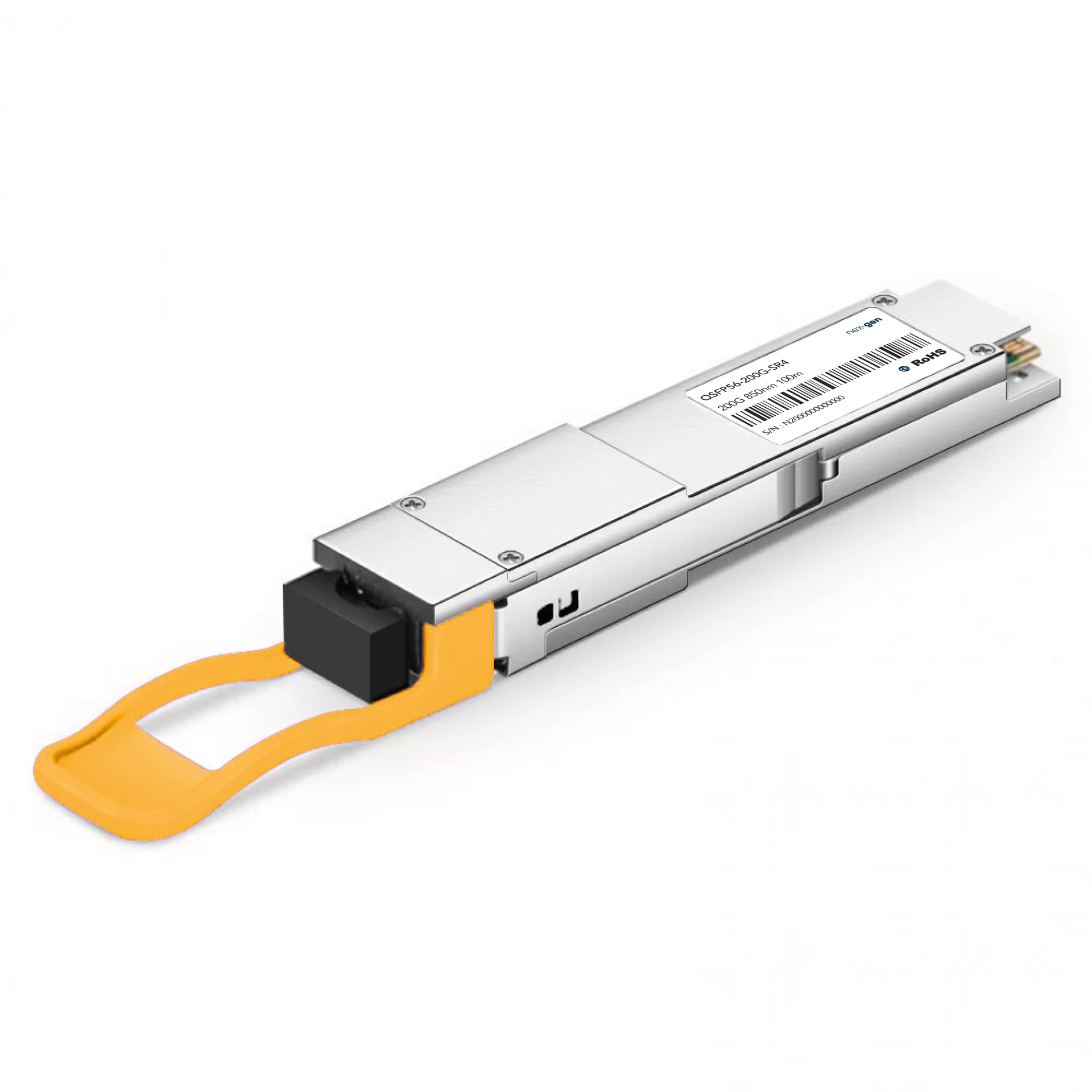
QSFP56 runs four transmit and receive channels, each operating at 53.125 Gb/s, delivering an aggregate data rate of 200Gb/s. It supports 850nm, 1310nm, CWDM, and LWDM wavelengths, uses MPO or LC optical connectors, and leverages PAM4 modulation — a step up from earlier NRZ-based designs. It does its job well, and for 200G applications it's a solid, proven choice.
The limitation is straightforward: QSFP56 was designed for 200G and stops there. If your network needs to scale to 400G or beyond, QSFP56 won't take you there. It's also not compatible with QSFP-DD, which matters if you're thinking about mixing form factors across your infrastructure.
What QSFP-DD brings to the table
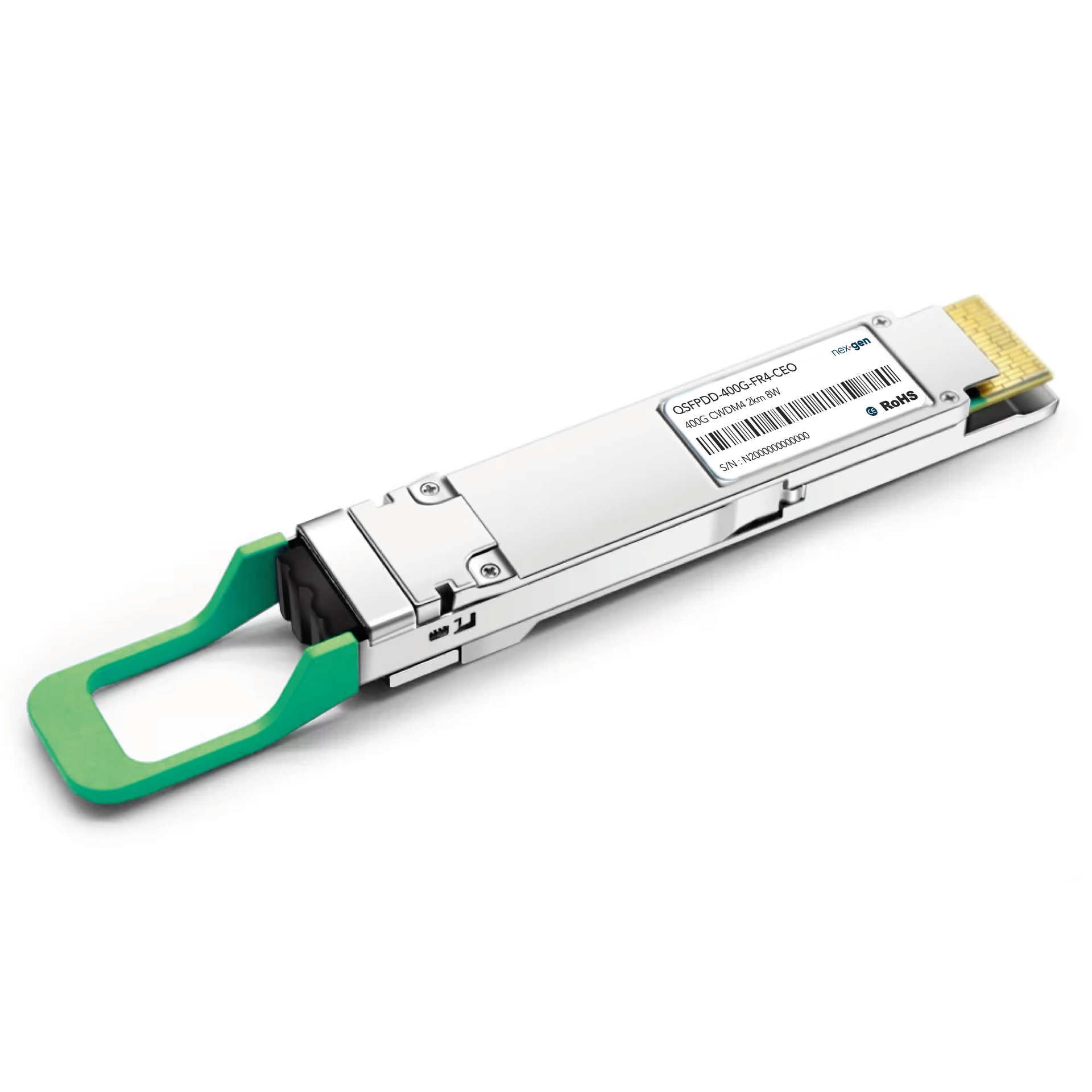
QSFP-DD — the double-density part of the name is the key — doubles the electrical interface lanes from four to eight. That architecture is what makes it capable of running at both 200G and 400G, depending on the modulation scheme in use.
At 200G, QSFP-DD typically runs on NRZ modulation across eight lanes of 25 Gb/s. At 400G, it switches to PAM4 at 50 Gb/s per lane. That flexibility is genuinely valuable — it means you can deploy 200G QSFP-DD today and upgrade to 400G on the same hardware when you're ready, without replacing your transceivers.
A quick note on NRZ vs PAM4 since both come up in this context: PAM4 uses four voltage levels to encode two bits per symbol, effectively doubling transmission speed compared to NRZ. The trade-off is that NRZ is simpler, consumes less power, has lower latency, and tends to be easier to deploy and maintain. For 200G applications that don't need PAM4's speed, NRZ's operational advantages are worth considering.
QSFP-DD is also backwards compatible with earlier QSFP generations including QSFP56, and its eight-lane design reduces fiber cost and link loss compared to multi-fiber alternatives.
The honest comparison
|
QSFP56 |
QSFP-DD |
|
|
Max Speed |
200G |
200G / 400G |
|
Modulation |
PAM4 |
NRZ (200G) or PAM4 (400G) |
|
Lanes |
4 |
8 |
|
Upgrade Path |
200G only |
Up to 400G and beyond |
|
QSFP-DD Compatible |
No |
Yes |
|
Cost |
Lower upfront |
15–30% more, lower opex |
|
Latency (200G NRZ) |
— |
Lower |
|
Power (200G NRZ) |
— |
Lower |
So which one is right for you?
It comes down to three questions: what hardware you're running, what your budget looks like, and how far ahead you need to plan.
If your existing switches and routers don't support QSFP-DD, upgrading to it may be impractical or prohibitively expensive — and forcing incompatible hardware together creates signal integrity and interference risks you don't want. In that scenario, QSFP56 is the sensible choice.
If upfront cost is the primary constraint and you're confident 200G will meet your needs for the foreseeable future, QSFP56 is the more straightforward investment.
If your hardware supports it, you want the flexibility to scale to 400G without a hardware overhaul, and you can absorb the initial cost premium, QSFP-DD is the stronger long-term play. The 15–30% upfront cost difference tends to narrow over time when you factor in lower power consumption, lower maintenance overhead, and the avoided cost of a future forklift upgrade.
Both are genuinely good options — the right answer just depends on where you're starting from and where you need to go. Nexgen carries both form factors across a range of reach and wavelength configurations, and our team is happy to help you work through which spec fits your deployment.